Function first
Explain what the insert connects, locates or supports and why the existing solution does not fit.
MADE TO YOUR DRAWING
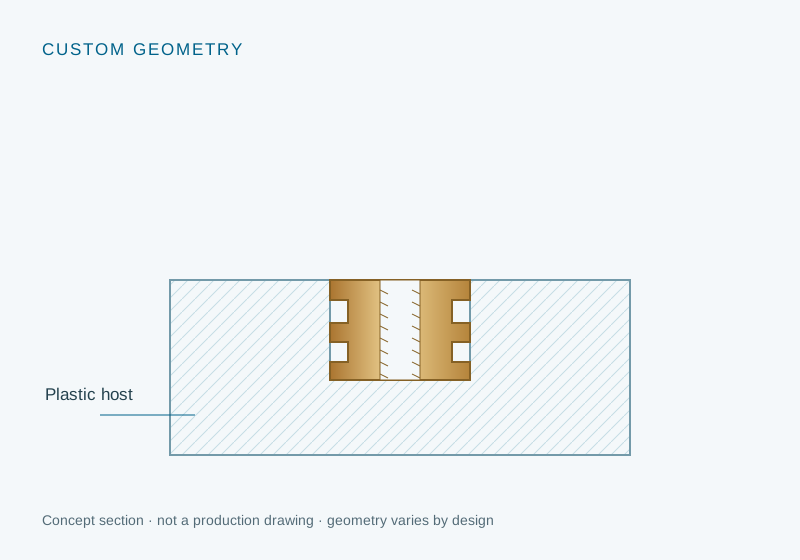
Combine thread, retention, location and mounting features in a drawing-based metal insert. Shape is a design choice, not a limit on the project.
HOW IT WORKS
Custom inserts start with the function of the part and the interfaces it must fit. A standard family can be a reference, but the final geometry is defined by the approved drawing and assembly requirements.
New designs, replacements, constrained envelopes and projects where a catalog part does not satisfy the thread, location, retention or installation requirements.
APPLICATION REVIEW
Explain what the insert connects, locates or supports and why the existing solution does not fit.
Share 2D drawings and 3D models with revision, tolerances, datums and any drawing notes.
Include the plastic component, installation route, mating part and critical access constraints.
Define how samples will be accepted and which inspection or functional results are required before production.
CUSTOM OPTIONS
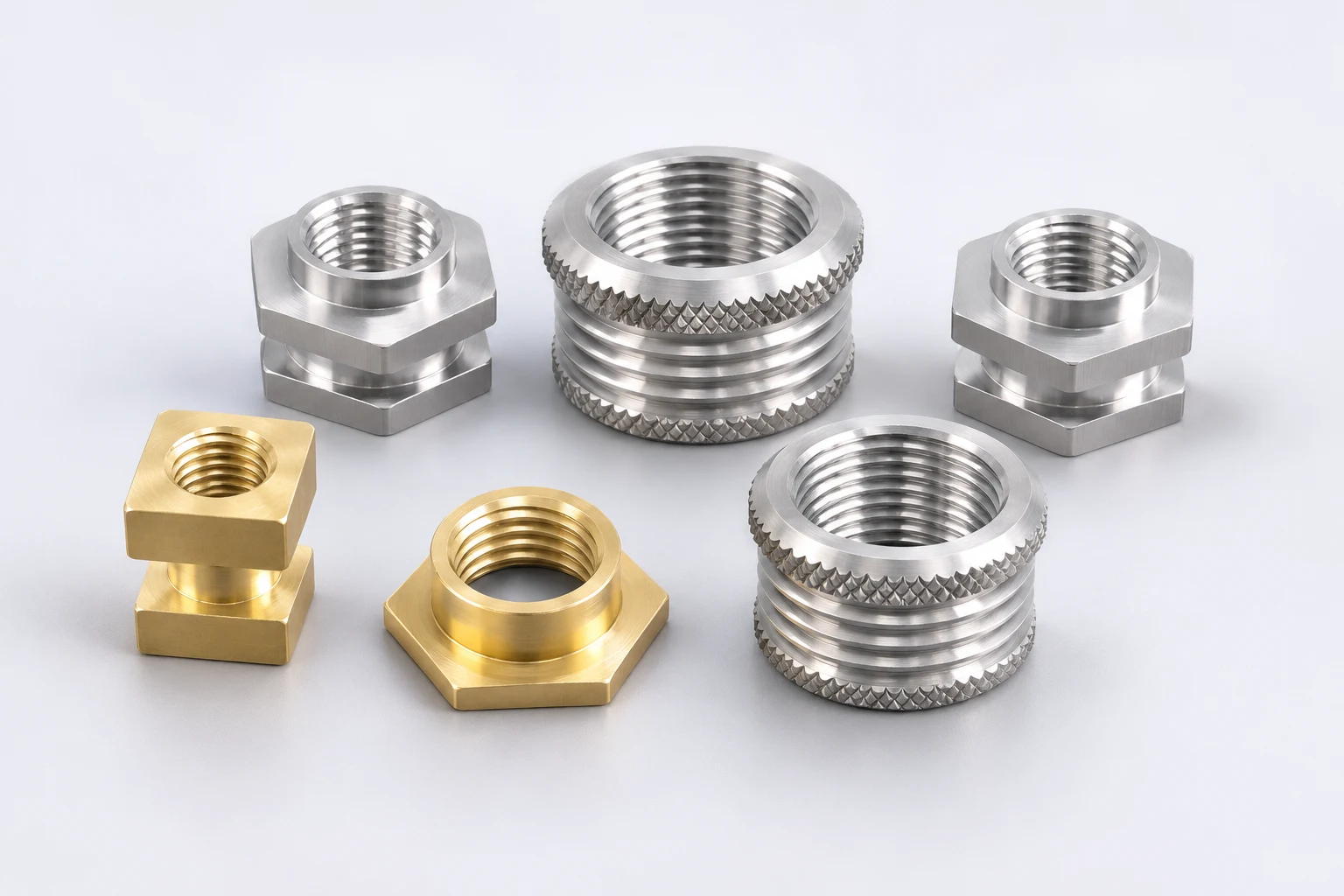
Round, hexagonal, square and irregular bodies; blind and through threads; shoulders, flanges, grooves, studs, cross-features and combined interfaces are all valid starting points for review.
| Requirement | Useful RFQ information |
|---|---|
| Thread / bore | Standard, pitch or bore fit; usable engagement and mating hardware |
| Envelope | Body dimensions, shoulder, flange, location and surrounding clearance |
| Material / finish | Specified grade, surface treatment and service environment |
| Volume / timing | Sample quantity, order quantity, repeat demand and required delivery |
| Acceptance | Drawing revision, critical dimensions, sample checks and documents |
COMMON QUESTIONS
No. The photographs show examples of previous work. Send the geometry your project needs, even when it looks different.
A photo is useful for initial discussion. Production needs an agreed definition of dimensions, material, finish, tolerances and acceptance criteria.
YOUR NEXT STEP
A drawing, a sample photo or a clear description is a good place to start.