Mold positioning
Define the locating interface, core-pin relationship and the surfaces used to hold the insert.
THREADED INSERTS
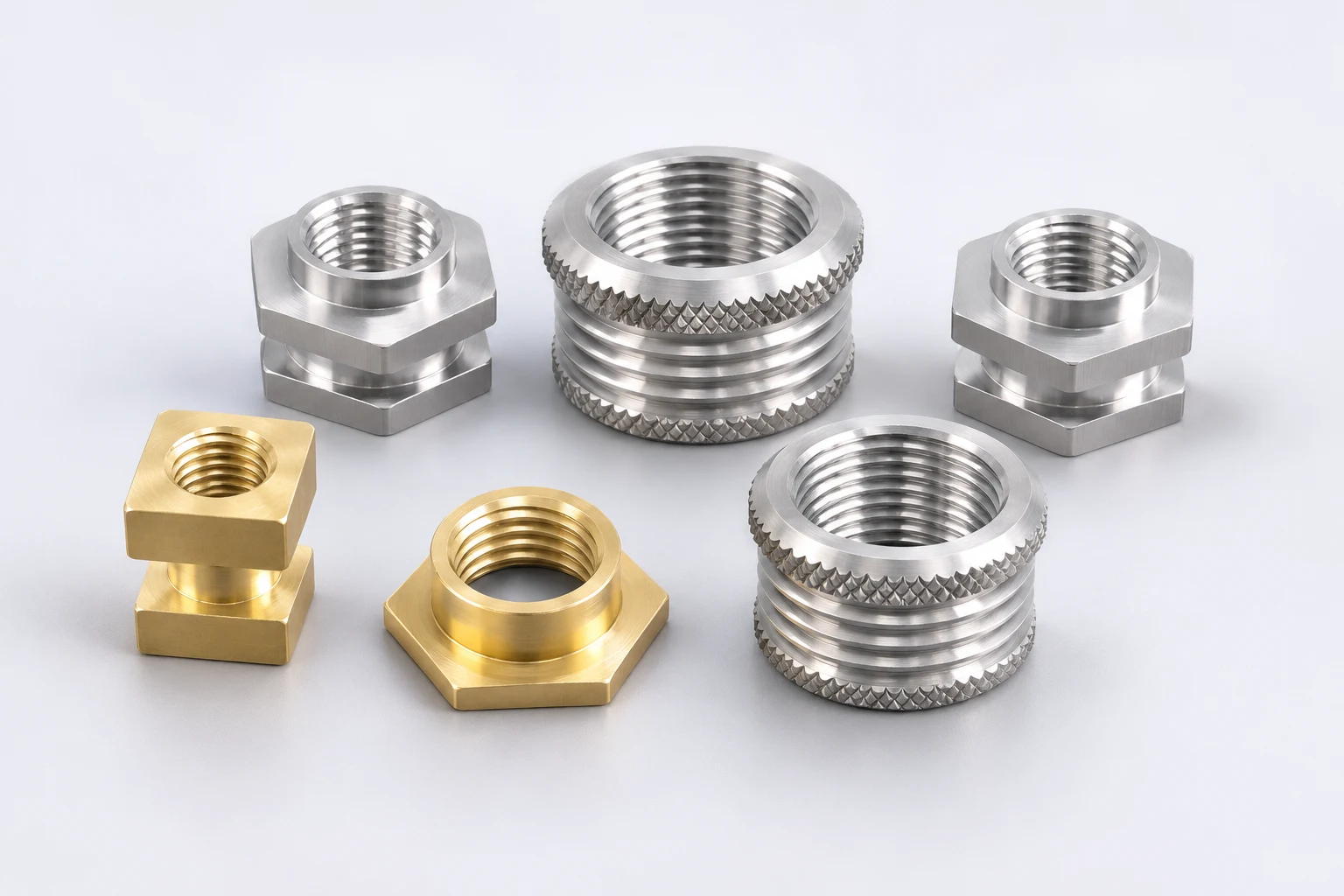
Integrate a metal thread or retention feature as the plastic component is molded. Coordinate the insert with the mold, core pin and finished assembly.
HOW IT WORKS
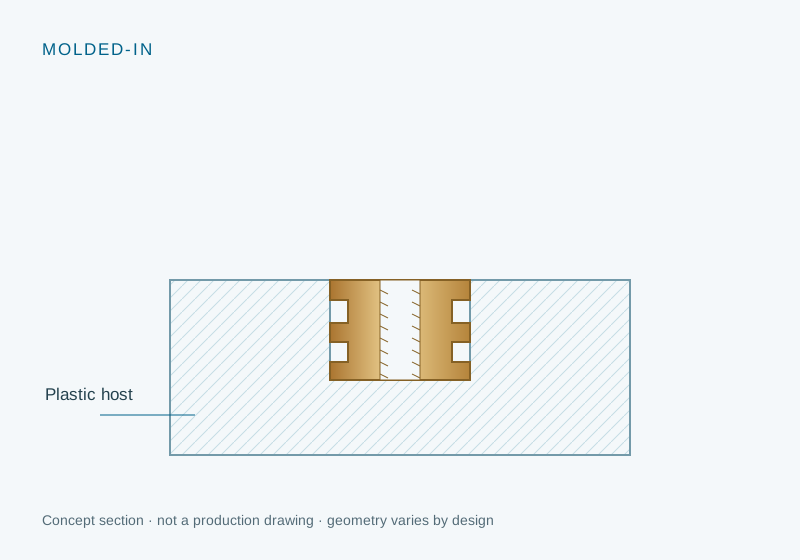
The insert is positioned in the mold before the plastic is introduced. Plastic forms around its external features. The placement and molding conditions are part of the joint design.
New molded components where the tooling and loading process can accommodate an insert. Both through-thread and blind configurations can be discussed, subject to the molding and core-pin design.
APPLICATION REVIEW
Define the locating interface, core-pin relationship and the surfaces used to hold the insert.
Identify how the thread or bore is protected from plastic entry, and which faces must remain exposed.
Review shoulders, grooves, knurls or other retention features alongside the available plastic section and molding flow.
Consider manual or automated loading, orientation, missing-insert detection and the finished-part inspection method.
CUSTOM OPTIONS
Internal threads, blind ends, shoulders, flanges, non-round retention bodies and multi-feature geometries can be developed from the drawing.
| Requirement | Useful RFQ information |
|---|---|
| Thread / bore | Standard, pitch or bore fit; usable engagement and mating hardware |
| Envelope | Body dimensions, shoulder, flange, location and surrounding clearance |
| Material / finish | Specified grade, surface treatment and service environment |
| Volume / timing | Sample quantity, order quantity, repeat demand and required delivery |
| Acceptance | Drawing revision, critical dimensions, sample checks and documents |
COMMON QUESTIONS
No. Body shape is only one feature. Confirm the actual installation route, host part and retention requirements.
Yes. Send the sample or photos with the plastic-part drawing and molding requirements. Similar appearance alone does not establish interchangeability.
YOUR NEXT STEP
A drawing, a sample photo or a clear description is a good place to start.