Plastic specification
Share the exact resin grade, filler content and any conditioning requirements. A material name alone may not describe the installed joint.
THREADED INSERTS
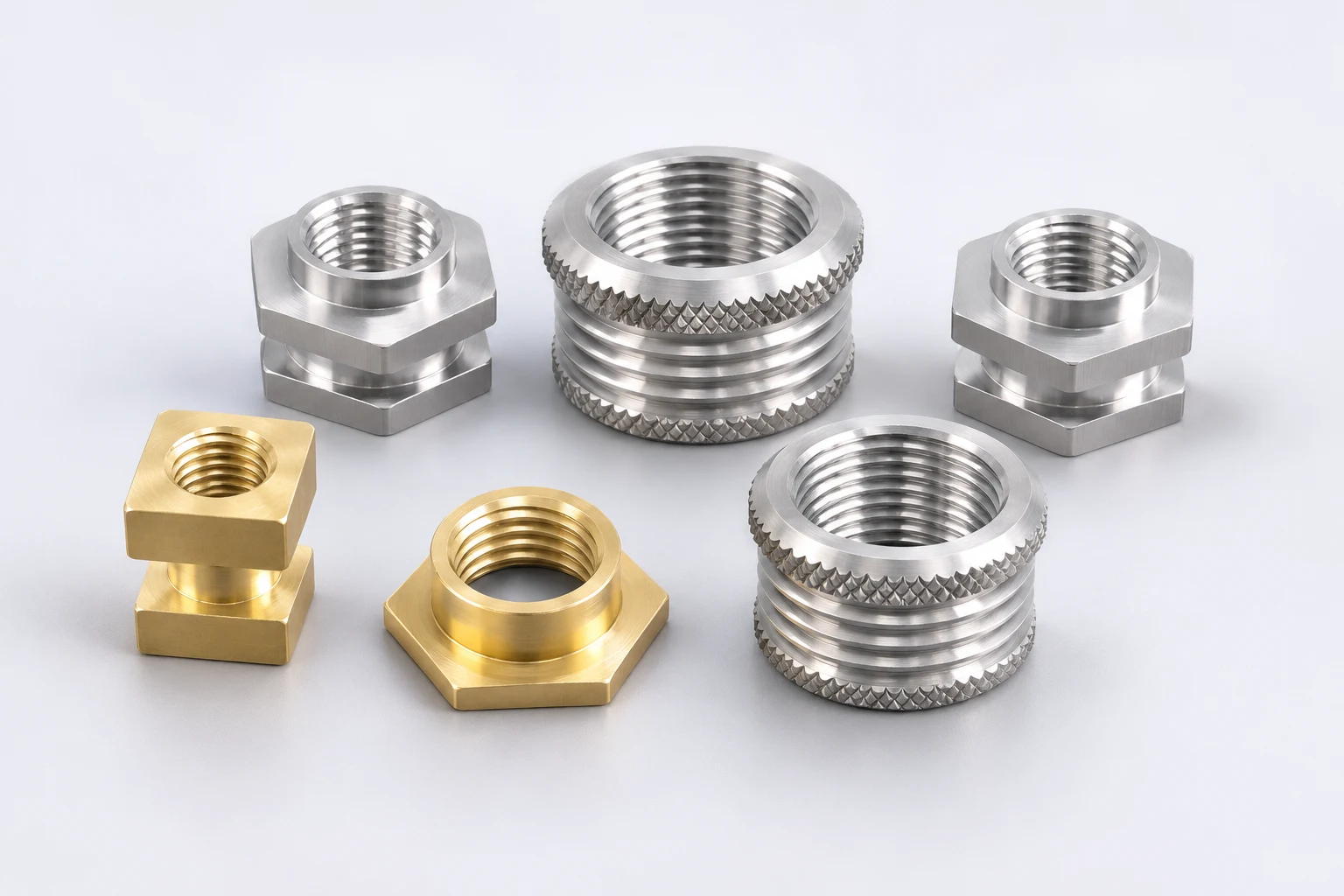
Build a reusable metal thread into a thermoplastic component after molding. Review the insert, plastic boss and installation process together.
HOW IT WORKS
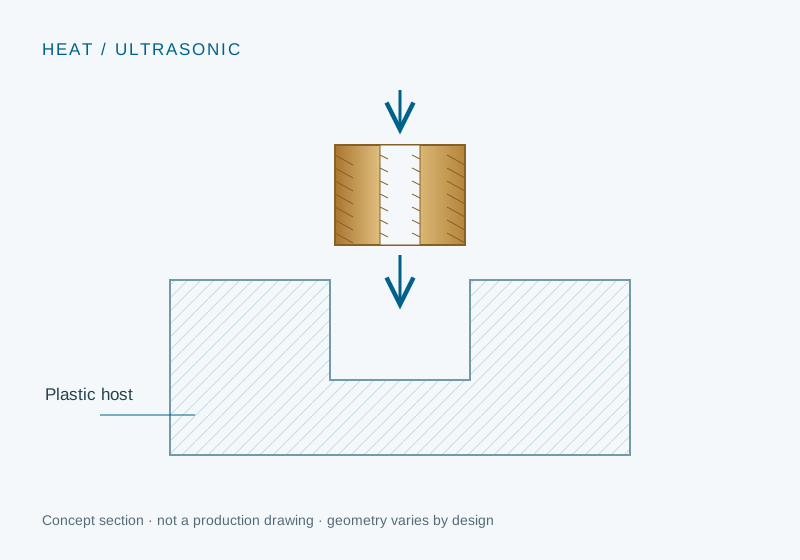
Heat installation transfers thermal energy into the insert and surrounding thermoplastic. Ultrasonic insertion uses vibration to create heat at the interface. In both routes, the plastic must form around the retention features and then solidify.
Thermoplastic housings, molded covers and serviceable assemblies where the thread is installed after molding. Heat and ultrasonic installation are not appropriate for thermosets that cannot be remelted.
APPLICATION REVIEW
Share the exact resin grade, filler content and any conditioning requirements. A material name alone may not describe the installed joint.
Provide the actual hole profile, depth, draft, surrounding wall and distance to adjacent features.
Identify the available thermal or ultrasonic equipment, tool access, insertion direction and required seated position.
Include the mating screw, engagement, tightening requirements and any pull-out or torque-out acceptance criteria.
CUSTOM OPTIONS
Straight or tapered bodies, headed or unheaded configurations, length, retention geometry, thread form and material can be reviewed against the application.
| Requirement | Useful RFQ information |
|---|---|
| Thread / bore | Standard, pitch or bore fit; usable engagement and mating hardware |
| Envelope | Body dimensions, shoulder, flange, location and surrounding clearance |
| Material / finish | Specified grade, surface treatment and service environment |
| Volume / timing | Sample quantity, order quantity, repeat demand and required delivery |
| Acceptance | Drawing revision, critical dimensions, sample checks and documents |
COMMON QUESTIONS
No. The process needs to be developed for the resin, insert, equipment and assembly. Validate the installed joint with production-representative parts.
It may be a useful prototype route, but the printed structure and installation conditions must be reviewed. Results from a printed part do not establish performance in a molded production part.
YOUR NEXT STEP
A drawing, a sample photo or a clear description is a good place to start.