Joint stack
Provide the plastic thickness, mating parts, fastener and the intended bearing surfaces.
NON-THREADED INSERTS
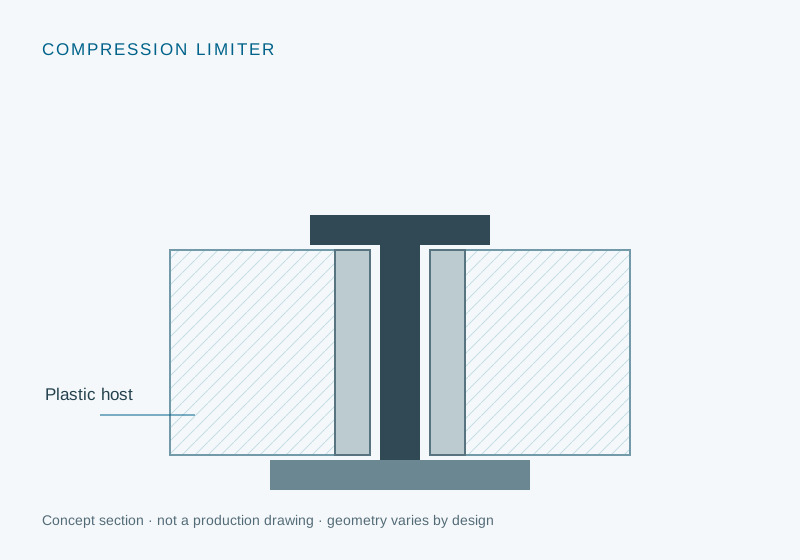
Protect the plastic in a bolted assembly by defining a metal compression path. Review the limiter length and bearing interfaces as part of the complete joint.
HOW IT WORKS
A compression limiter is usually a non-threaded component that supports compressive load when a fastener is tightened. It serves a different function from the threaded insert that receives the screw.
Plastic brackets, housings and assemblies with a bolted clamp connection. Post-mold and molded-in arrangements are both possible, depending on the limiter design and production process.
APPLICATION REVIEW
Provide the plastic thickness, mating parts, fastener and the intended bearing surfaces.
Coordinate limiter length and tolerances with the assembled stack and intended plastic compression.
Define the bore, bolt clearance, positional variation and contact with any threaded insert in the mating part.
Share fastener grade, tightening requirements, service temperature and environmental exposure.
CUSTOM OPTIONS
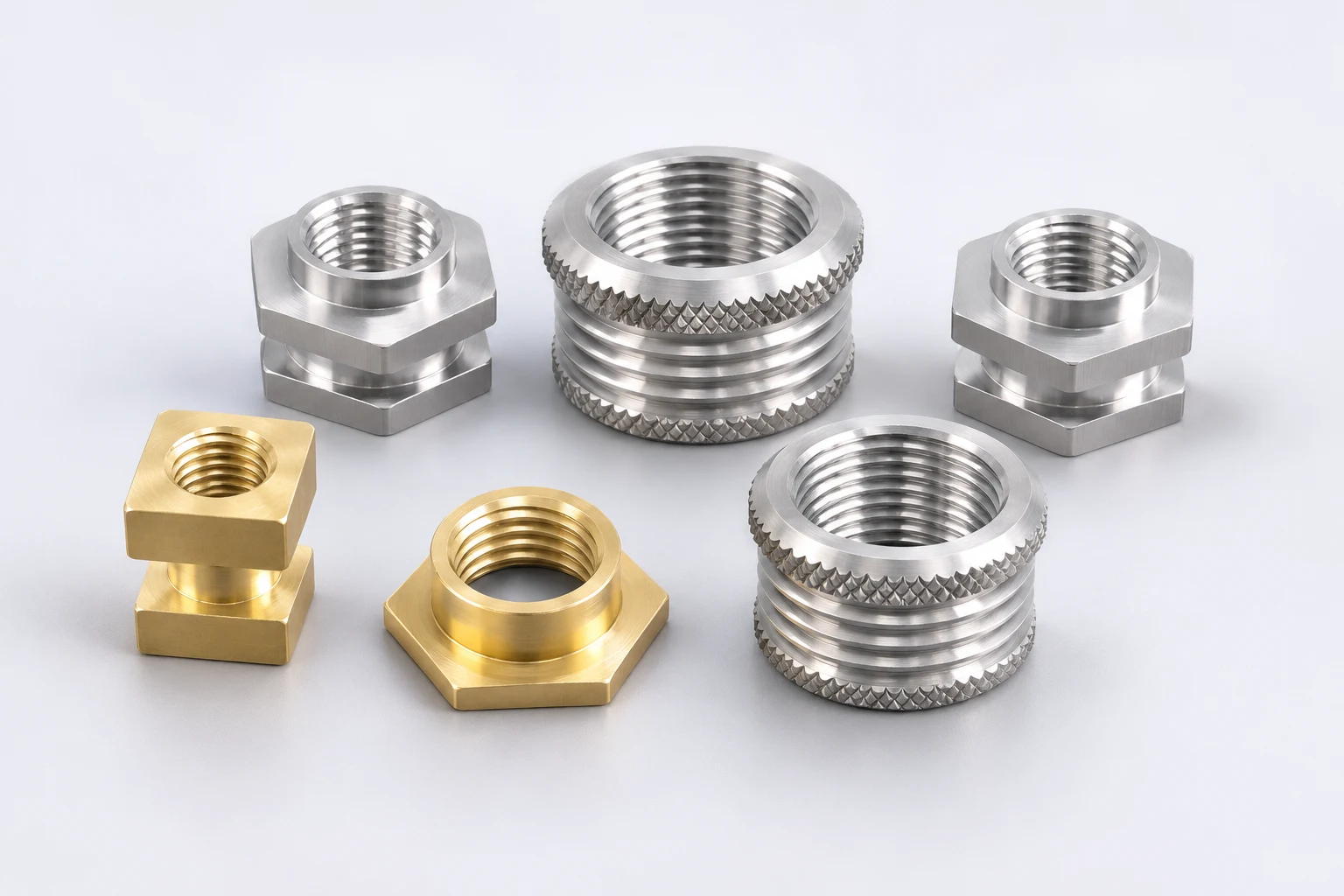
Machined sleeves, headed or unheaded forms, stepped bores, non-round clearance features and retention details can be reviewed. Manufacturing route is agreed for the design and quantity.
| Requirement | Useful RFQ information |
|---|---|
| Thread / bore | Standard, pitch or bore fit; usable engagement and mating hardware |
| Envelope | Body dimensions, shoulder, flange, location and surrounding clearance |
| Material / finish | Specified grade, surface treatment and service environment |
| Volume / timing | Sample quantity, order quantity, repeat demand and required delivery |
| Acceptance | Drawing revision, critical dimensions, sample checks and documents |
COMMON QUESTIONS
Usually no. One controls compression; the other provides the thread. A joint can require both functions.
Yes. Send the assembled joint drawing and the required dimensions. Include the plastic thickness and fastener details, not only the metal sleeve.
YOUR NEXT STEP
A drawing, a sample photo or a clear description is a good place to start.